The Fence Is Not the Fault Line: Restorative Triage for Winter Neighbour Disputes
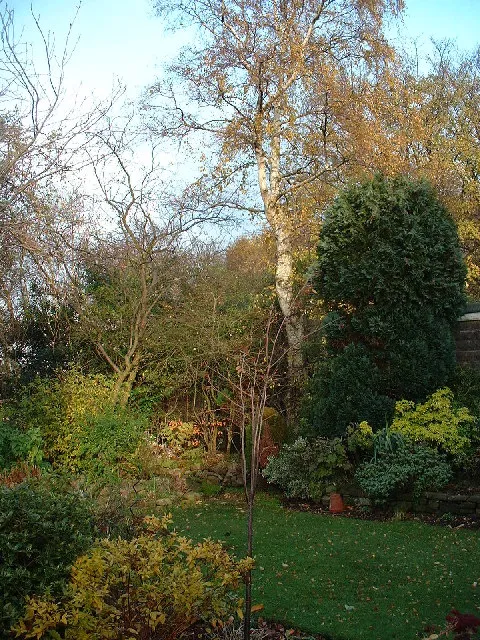
Photo: Ron Shirt, CC BY-SA 2.0, via Wikimedia Commons
In the shortening days of November 2026, gardens are seen differently. A hedge that seemed unremarkable in summer casts a longer shadow; a security light that once felt reassuring now reaches across a boundary; fallen leaves gather in a drain that nobody owns clearly enough to clear. These are practical matters, but they arrive in a season that compresses patience. By the time a community worker or practitioner is asked to help, the dispute may already have produced a file: photographs, dated notes, a formal complaint, perhaps a letter before action.
A restorative approach does not replace legal routes, nor should it pretend that boundary law, planning controls or high hedge procedures are matters of feeling alone. Its contribution is earlier and narrower: to slow the drift from a liveable problem into a positional contest, and to see whether a structured conversation can do some of the work that correspondence is currently being asked to do.
Why winter compresses neighbour conflict
Neighbour disputes often gather force around visibility. In winter, low sun exaggerates the line of a fence; interior lights reveal who is at home and when; leaf litter and blocked gutters become evidence in a case that nobody intended to build. The practical issues are real, but the season adds a sense of deadline. People want the matter settled before another dark month, another storm, another family gathering.
Formal routes have their place. Local authority high hedge services, environmental health, leasehold management and pre-action correspondence exist because some matters require adjudication. The restorative question is not whether those routes are legitimate, but whether they are being used as the first language of a dispute that has not yet had a second one. A letter can clarify a position; it can also freeze it.
Triage before conversation
Practitioners should begin with suitability, not with optimism. Restorative work is not appropriate where there is violence, harassment, intimidation, safeguarding risk or a clear imbalance that makes safe dialogue impossible. Nor should it be used to delay urgent legal advice or to press a reluctant party into mediation. Triage should ask four questions: Is anyone unsafe? Is there a legal or statutory deadline that must be respected? Can the parties speak without coercion? What would a good outcome look like if it were smaller than victory?
Where the dispute concerns a high hedge, a boundary line or a formal notice, the restorative offer should sit alongside the legal process rather than obscure it. A useful formulation is: 'I am not here to decide the legal question. I am here to see whether there is a practical conversation that could reduce the harm while the formal question takes its course.' That distinction protects the practitioner and gives the parties room to speak without asking them to abandon their rights.
Mapping the dispute without taking sides
A simple map can prevent a first meeting from becoming a rehearsal of the file. Ask each household to separate four things: what happened, what impact it has had, what they want, and what they fear if nothing changes. The position may be 'cut the hedge to two metres'. The interest may be 'I need light in the kitchen in the morning'. The fear may be 'I will be told I am being unreasonable again'.
This mapping is not a technique for making serious matters trivial. It is a way of hearing the practical request beneath the accusation. A practitioner might ask: 'If this were resolved, what would you notice first?' and 'What would you not want to lose in the process?' Those questions tend to produce behavioural detail rather than motive-reading, which is more useful for agreements.
Opening scripts for a first conversation
Scripts should be short, plain and honest about limits. With an individual household, an opening might be: 'I am not here to decide who is right about the boundary. I want to understand what this has been like and whether a conversation with your neighbour is possible on a practical basis.'
With both parties present, the frame might be: 'We are not going to settle property law today. We are going to see whether there is an agreement about light, leaves or access that both households can live with, and what would need to happen before that could be tested.'
Boundary-setting should be equally clear: 'I can hear that you want the hedge removed entirely. That may not be something this process can deliver. What I can help with is explaining the impact and exploring interim steps that do not commit either of you to a legal position.'
Boundaries without escalation
Restorative conversations in neighbour disputes need firmer edges than many practitioners expect. Ground rules should exclude doorstep conversations after dark, speculation about motive, and the relitigating of every incident since the dispute began. One issue per conversation is often enough. Time-box the discussion. Offer shuttle mediation where a joint meeting would be unsafe or unproductive. Clarify confidentiality and its limits in plain language before anyone speaks.
Where correspondence has already begun, acknowledge it rather than pretending it is absent. A useful line is: 'The letter is part of the story; it is not the whole story.' This allows the practitioner to recognise the seriousness of the formal step while inviting the parties to describe the practical problem the letter was meant to solve.
Repair when the paperwork is larger than the problem
Some disputes arrive overburdened by paperwork because the original issue was never named accurately. A complaint about a hedge may, on examination, concern one overhanging branch and a light that shines into a bedroom. A dispute about leaves may concern a shared drain and an agreed clearing schedule. When the issue is smaller than the file, repair should be proportionate: a clear acknowledgment, a small practical step, a review date.
Apology should not be forced, and it should not be confused with an admission of liability. 'I did not realise the light reached your kitchen' can be a genuine restorative sentence. Agreements should be written in neutral language, with dates and responsibilities, and reviewed rather than assumed. If the formal process continues, the restorative work may still reduce hostility and make later communication possible.
Holding the practitioner role
These cases are repetitive and can absorb a practitioner's attention. Supervision matters. So does signposting: accredited community mediation services, local authority high hedge teams, Citizens Advice and legal advisers all have roles that restorative practice does not replace. The practitioner's task is to keep the conversation safe, specific and bounded, not to become the final arbiter of the fence.
In winter 2026, the fence is rarely the fault line. The fault line is often the absence of a conversation with enough structure to hold the practical issue without turning it into a contest of persons. Restorative triage cannot guarantee agreement. It can, however, ensure that the first formal letter is not the only attempt at repair.